Are There Monthly Limits on Free UPI Transactions?
Published: 8 October 2026
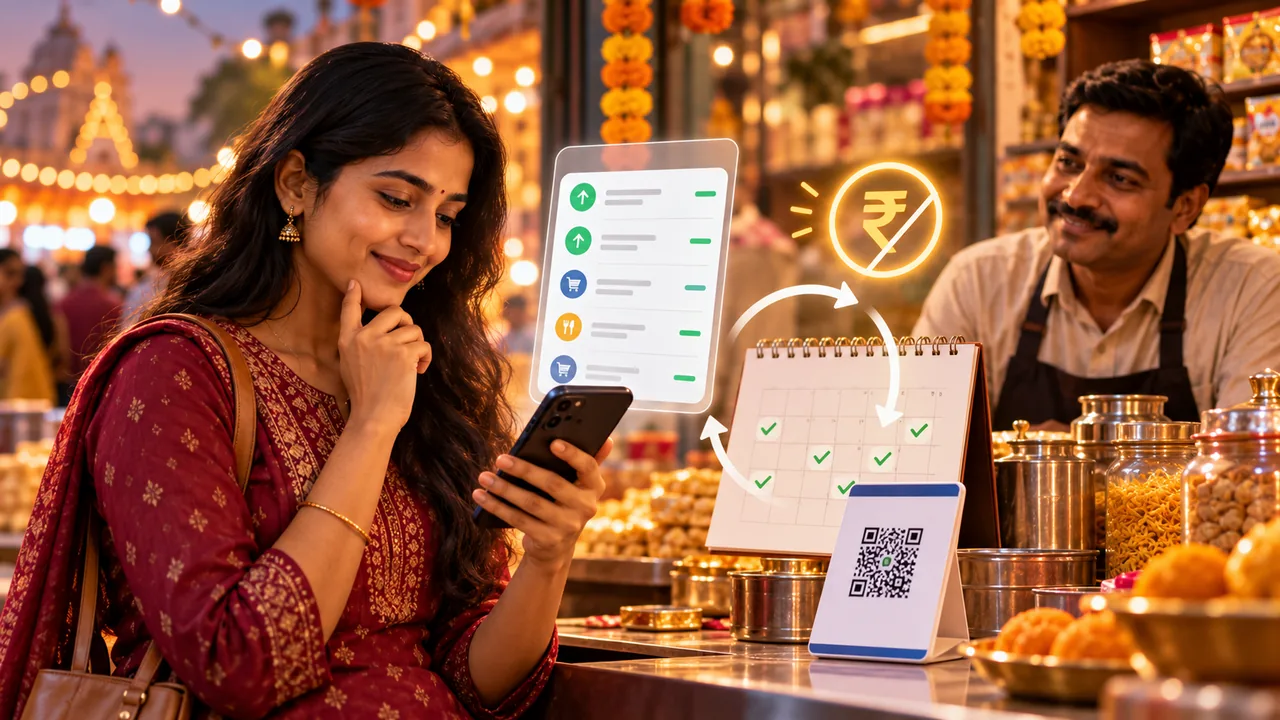
The introduction of merchant MDR has led some users to wonder whether UPI is becoming a “free up to a limit” service for consumers. A common version of the question is: how many free UPI payments can I make in a month?
Under the 2026 framework, there is no monthly quota, volume restriction or tiered cap on free UPI transactions for consumers.
There Is No Monthly Free-Transaction Allowance
The government’s September 2026 clarification states that individuals continue to have unlimited free usage, with no monthly quotas, volume restrictions or tiered caps on free UPI transactions.
So the framework does not create a model such as “20 free UPI payments per month, then a fee.”
Why People Confuse MDR With a Consumer Limit
The new MDR uses a ₹2,000 threshold for qualifying merchant payments. That number can sound like a consumer allowance if it is taken out of context.
It is not. ₹2,000 is relevant to whether the merchant-side baseline MDR applies to a qualifying P2M transaction. It does not mean a person can use only ₹2,000 of UPI for free in a day or month.
Daily UPI Limits Still Exist
Daily transaction limits are separate from MDR. The government has described limits prescribed by banks and NPCI as security and risk-management safeguards, with limits generally varying according to transaction category.
A daily limit controls whether a transaction can be processed. It does not create a pricing tier where the next transaction becomes chargeable after the user reaches a free allowance.
For the distinction in detail, see Is the ₹2,000 UPI MDR Threshold the Same as the Daily UPI Limit?.
Do P2P Transfers Count Toward a Chargeable Monthly Quota?
No monthly chargeable quota exists under the framework. P2P transfers themselves continue to remain free irrespective of the amount transferred, subject to normal operational limits.
Self-transfers are also covered by the free P2P treatment.
Can a UPI App Start Charging After Many Payments?
The official clarification says UPI application providers are prohibited from imposing platform fees or hidden charges for UPI payments. That rule is not written as “free until a certain number of transactions.”
See Can UPI Apps Charge a Platform Fee? for the app-fee question.
Does the Merchant MDR Affect How Many Free Payments a Customer Can Make?
No. Merchant MDR and consumer usage limits answer different questions.
A consumer could make multiple merchant payments during a month without being placed into a chargeable monthly tier. On the merchant side, some of those transactions may fall within the MDR framework depending on value and merchant category.
What Does “Unlimited Free Usage” Not Mean?
It does not mean there are no security, transaction-value or risk controls. A bank can still decline or limit a transaction because of daily limits or other safeguards.
“Free” refers to the absence of a consumer UPI transaction charge under the framework. “Unlimited” in the government clarification refers to there being no monthly quota or volume-based charging tier, not the removal of all operational limits.
Can a Bank Still Block or Decline a Free Transaction?
Yes. “Free” does not mean “guaranteed to process.” A bank or UPI system can still apply security controls, daily limits, fraud checks or other operational safeguards. Those controls can stop a payment without turning it into a paid transaction.
This is why a declined payment should not be interpreted as evidence that the user has exhausted a free monthly quota.
Why Monthly Quotas Would Be a Very Different Policy
A quota model would count the number or value of a consumer’s transactions and begin charging after a threshold. The 2026 framework explicitly says that is not the model being introduced.
The charging rules operate on the merchant side for covered transactions. Consumer usage remains free without a monthly tiered cap, even though operational transaction limits can still apply.
Examples of What Is and Is Not a Monthly Charge Limit
If a user makes 40 UPI payments in a month, the framework does not say the 41st becomes chargeable. If the total value of a user's payments is large, the framework does not create a monthly consumer slab that starts charging after a particular rupee amount.
By contrast, a bank can still apply a daily transaction limit or reject a transaction because of risk controls. That can happen even on the first payment of the month. The timing of the decline has nothing to do with a free-transaction quota.
Why This Matters for Merchants Too
A merchant may pay MDR on some covered transactions even while the consumer making those payments remains within unlimited free usage. That can look confusing until the two sides are separated.
The merchant framework asks whether a transaction is a qualifying P2M payment and whether special rules apply. The consumer framework asks whether the user is charged for using UPI. The answer to the second question remains no under the official 2026 policy.
Bottom Line
There is no monthly quota on free UPI transactions for consumers under the 2026 MDR framework. Daily bank/NPCI limits can still apply for security and risk management, but those limits are not MDR charging thresholds and do not create a paid tier after a user reaches a certain number of transactions.