Why Was UPI MDR Introduced in 2026?
Published: 8 October 2026
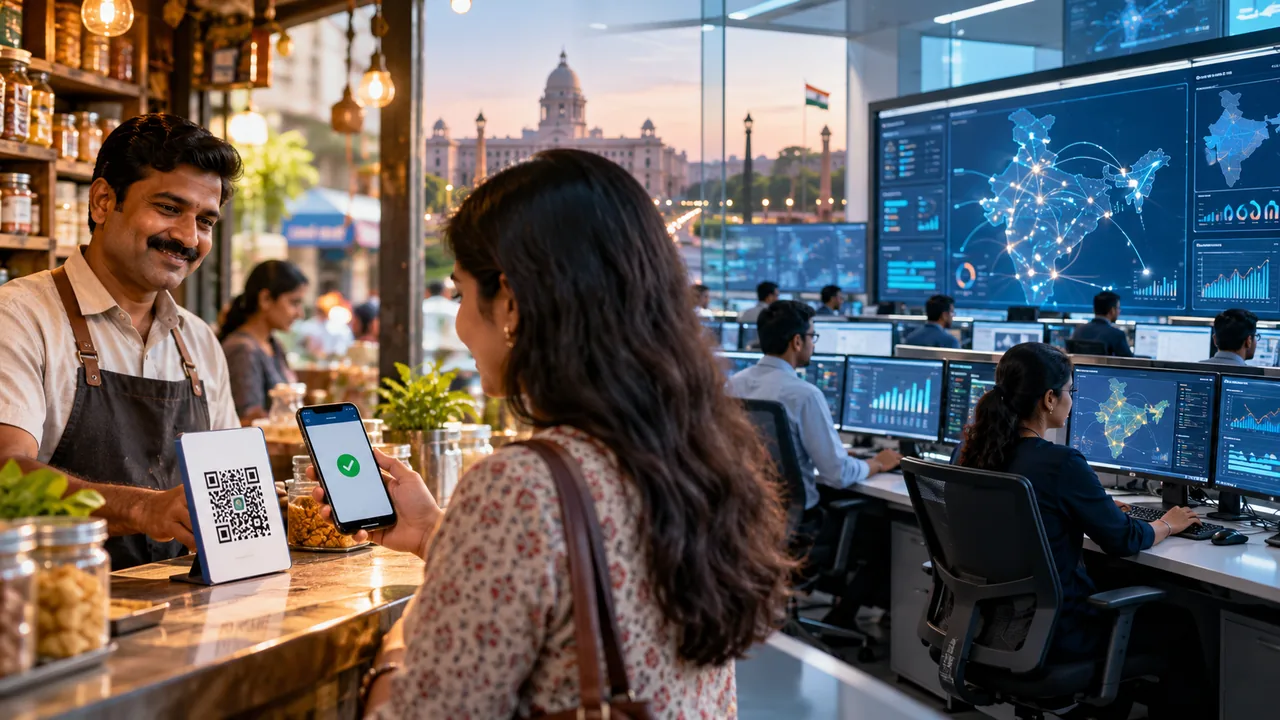
UPI became India’s dominant digital-payment system while most account-based merchant payments operated with zero MDR. So when the 2026 framework introduced a limited merchant charge, the obvious question was not only “how much?” but “why now?”
The official rationale is that a payments network handling billions of transactions requires continuing investment. The government has framed the change as a way to support UPI’s long-term sustainability while still keeping person-to-person transfers, low-value merchant payments and qualifying small merchants outside the MDR net.
The Official Reason Is About Sustaining the UPI Ecosystem
In the September 2026 FAQs on Merchant Discount Rate on Select UPI P2M Transactions, the Department of Financial Services under the Ministry of Finance points to infrastructure resilience, innovation, cybersecurity and customer service as reasons for the limited MDR framework.
Those are broad system-level needs. UPI must process enormous transaction volumes, remain available during demand spikes, defend against fraud and cyber threats, support banks and payment apps, and continue improving as usage grows.
Why Not Charge Every UPI Payment?
The framework is deliberately selective. Person-to-person transactions remain free regardless of amount. Merchant payments up to ₹2,000 stay outside the baseline MDR, and qualifying small merchants under the P2PM framework continue with zero MDR.
The government’s September clarification estimated that approximately 96% of P2M transactions would remain unaffected because they are either below the ₹2,000 threshold or covered by the small-merchant zero-MDR framework.
That design helps explain the policy approach: introduce a limited charge on a smaller slice of merchant transactions rather than converting UPI into a paid service for ordinary users.
Why the ₹2,000 Threshold Matters to the Policy
The threshold protects the large number of small-value merchant payments that make up everyday UPI usage. A tea shop, neighbourhood store or small service payment is much less likely to fall into the chargeable band than a larger commercial purchase.
The threshold is not a daily free allowance for consumers. It is part of the merchant MDR framework. This distinction is covered in Is the ₹2,000 UPI MDR Threshold the Same as the Daily UPI Limit?.
Why Small Merchants Receive Separate Protection
The framework does not assume that every merchant has the same scale or economics. P2PM exists to protect small vendors receiving UPI QR payments within the prescribed monthly threshold.
That means one large payment does not automatically move an otherwise qualifying P2PM small merchant into the 0.4% structure. Instead, the framework uses account categorisation and the monthly receipt rule, including the three-consecutive-month transition test.
For more detail, see Does UPI MDR Apply to a Small Shop?.
Why Special Merchant Categories Have Different Rates
The standard 0.4% rate is not applied mechanically to every merchant sector. The framework identifies special categories with separate treatment, including flat-fee structures for specified sectors and a different rate for capital-market transactions.
This suggests the policy is designed around transaction economics and merchant categories rather than a single universal percentage for every business.
Does MDR Mean the Government Is Charging for UPI?
No. The government has specifically clarified that MDR is neither a tax nor a charge collected by the Government or NPCI. The framework describes it as a merchant-side payment cost within the payments ecosystem.
That distinction matters because “the government introduced MDR” and “the government collects MDR” are not the same statement. The first concerns the policy framework; the second is specifically rejected by the official clarification.
What About Consumers?
The policy continues to protect consumers from direct UPI transaction charges. UPI app providers are not permitted to impose platform fees or hidden charges for UPI payments under the official clarification, and merchants are not supposed to pass MDR to buyers as an extra UPI surcharge.
So the policy objective is not to make consumers pay to use UPI. It is to introduce a limited merchant-side funding mechanism for a narrower set of transactions while preserving free consumer usage.
Why the Government Chose MDR Rather Than a Consumer Fee
The framework preserves a long-standing feature of UPI: the payer does not face a transaction charge for ordinary use. Instead of introducing a consumer fee, the 2026 approach places a limited merchant-side charge on a narrower set of transactions.
That design matters for adoption. UPI has grown partly because the payment experience is simple and inexpensive for consumers. Keeping the user side free while asking larger covered merchant transactions to contribute to system costs is the policy balance reflected in the official material.
How the New Framework Tries to Protect Small Commerce
The policy is also structured around merchant scale. The ₹2,000 transaction threshold shields small-value purchases, while P2PM protects qualifying small merchants based on monthly UPI receipts. Special categories then receive their own rates rather than one universal percentage.
Those features make the framework more targeted than a blanket MDR on every merchant payment. Whether the balance works well in practice will depend on implementation, but the published policy intent is clear: sustain the network without broadly charging consumers or small merchants.
Bottom Line
UPI MDR was introduced in 2026 because the government says a system processing billions of transactions needs sustainable support for infrastructure, resilience, cybersecurity, innovation and customer service.
The framework attempts to balance that objective with continued free P2P usage, protection for small merchants and low-value transactions, and lower merchant charges than those generally associated with card payments. That balance—not simply “charging for UPI”—is the central policy idea behind the new MDR structure.