Which UPI Payments Are Exempt From MDR?
Published: 8 October 2026
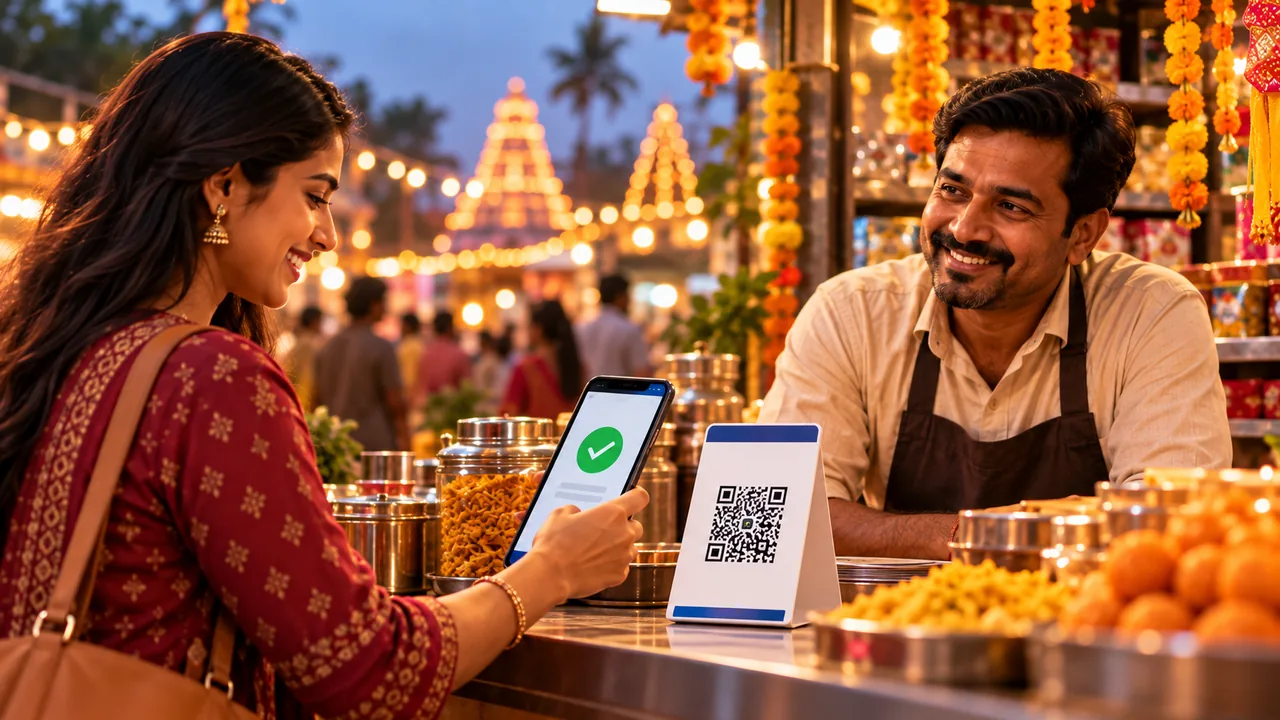
People often search “How to avoid MDR?” but that phrasing can lead in the wrong direction. The useful question is not how to escape a charge that legitimately applies; it is which transactions the official UPI framework already keeps at zero MDR.
Several important categories remain free, but they are free for different reasons. Understanding those reasons helps prevent mistakes such as treating a special low rate as a full exemption.
P2P UPI Transfers Remain Free
Person-to-person UPI transfers continue to be free regardless of the amount transferred. That includes ordinary transfers to friends or family as well as self-transfers between accounts owned by the same person.
The government’s September 2026 clarification states that the new framework has no impact on P2P transactions.
Qualifying Merchant Payments Up to ₹2,000
For the regular P2M framework, payments up to ₹2,000 remain at zero MDR. The baseline 0.4% rate begins only when a qualifying transaction is above ₹2,000.
That means exactly ₹2,000 is still at zero MDR under the baseline rule. The separate article UPI Merchant Charges on Payments Above ₹2,000 explains the boundary.
P2PM Small Merchants Can Remain at Zero MDR
Qualifying small vendors under the P2PM framework receive special protection. They can continue accepting UPI QR payments at zero MDR while they remain within the prescribed monthly collection conditions and account categorisation.
The Department of Financial Services FAQs use the ₹1 lakh monthly threshold and a three-consecutive-month test for formal transition to regular P2M.
This is why one large payment above ₹2,000 does not automatically mean a P2PM small merchant must be charged 0.4%.
UPI Mandates and AutoPay Have Separate Zero-MDR Treatment
The official FAQs state that automated recurring standing instructions through UPI Mandates or AutoPay do not carry the prescribed MDR transaction charges.
This can matter for recurring payments such as certain subscriptions, bills or financial instructions. The recurring mandate rule should not be confused with a one-time UPI payment in the same broad sector.
Consumers Are Not Charged MDR
MDR is a merchant-side concept. Consumers making UPI payments do not pay the MDR as a transaction fee. UPI apps are also prohibited from imposing platform fees or hidden charges for the UPI payment itself under the official clarification.
Special Low Rates Are Not the Same as Exemptions
Some payments do attract MDR, just at a special rate. Insurance, fuel, railways and specified utilities can use a flat ₹5 structure above ₹2,000. Covered capital-market payments use 0.02% capped at ₹300.
Those categories are not “zero MDR” merely because their charge is lower than the standard 0.4%.
Why Merchant Classification Still Matters
A list of exemptions is useful only if the underlying transaction has been classified correctly. A shop cannot simply describe itself as a small merchant to obtain the P2PM rule; the account categorisation and monthly-receipt conditions matter.
Likewise, an ordinary commercial payment should not be relabelled as a special sector merely to obtain a flat fee.
What the 96% Figure Means
The government estimated that approximately 96% of P2M transactions would remain unaffected because they are below ₹2,000 or covered by the zero-MDR framework for small merchants.
That figure is useful context, but it should not be interpreted as a permanent guarantee that exactly 96% of transactions will always be free. Transaction patterns can change.
Zero MDR Does Not Mean the Transaction Has No Other Rules
A payment can be outside MDR and still be subject to UPI transaction limits, fraud controls, account restrictions or other operational rules. “Zero MDR” refers to the merchant discount rate; it does not erase every other condition that can apply to a payment.
This distinction is especially useful for P2P transfers and self-transfers, where the absence of MDR does not mean an unlimited amount can always be sent in one transaction.
Why Exemptions Should Not Be Used as Labels of Convenience
The zero-MDR categories exist for defined transaction types and merchant classifications. A regular merchant should not describe a commercial payment as P2P simply to avoid MDR, and a larger business should not claim P2PM status merely because it prefers the small-merchant treatment.
The correct approach is classification first, exemption second. That keeps the explanation aligned with the framework rather than turning exemptions into workarounds.
Bottom Line
The main zero-MDR cases under the 2026 framework include P2P transfers, qualifying P2PM small merchants, regular merchant payments up to ₹2,000 and UPI Mandates/AutoPay. Consumers also continue to use UPI without an MDR transaction charge.
The safest way to determine whether MDR applies is to identify the transaction type and merchant category first, rather than looking for a workaround after the fact.