What Is the UPI MDR on Electricity, Water and Gas Bills?
Published: 8 October 2026
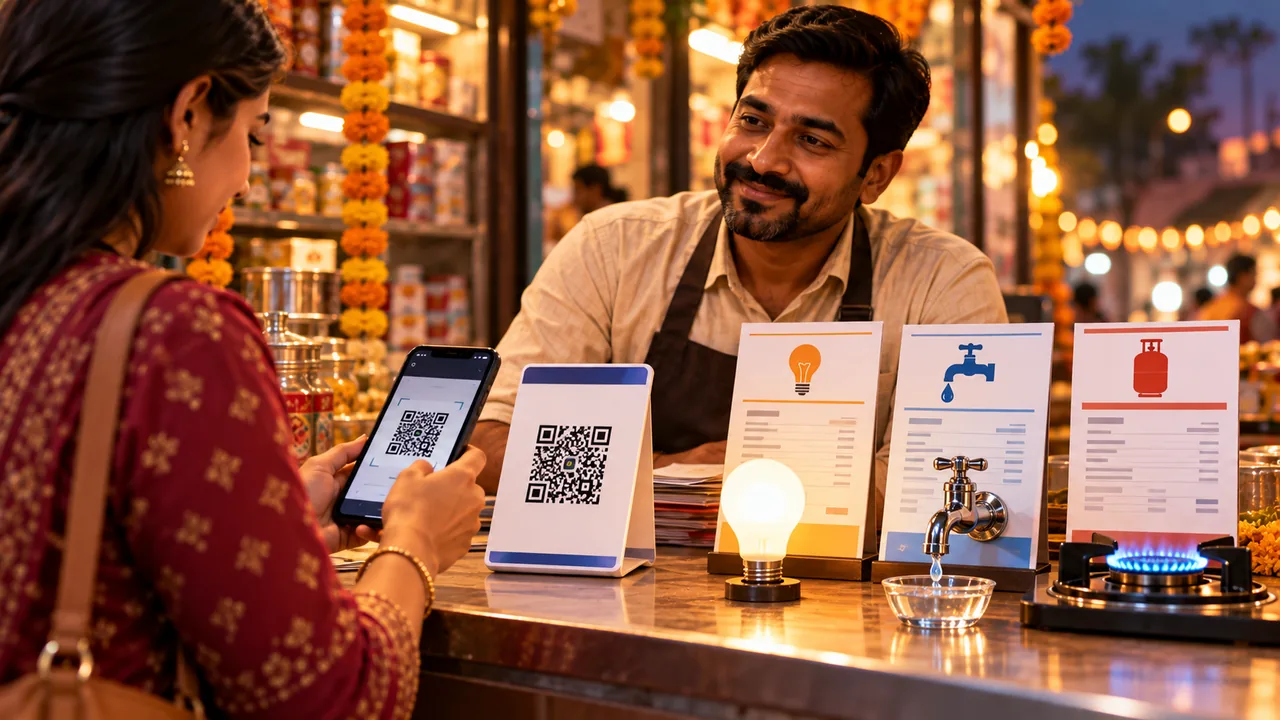
Utility bills are another area where the standard 0.4% UPI MDR formula should not be applied automatically. The 2026 framework gives specified utility payments a flat-fee treatment.
Covered electricity, water and piped natural gas payments above ₹2,000 use a flat ₹5 MDR. Payments up to ₹2,000 remain at zero MDR.
Which Utility Payments Are Specifically Named?
The Department of Financial Services’ September 2026 FAQs specifically identify electricity, water and piped natural gas. Those are the categories we can state with confidence from the published framework.
It is better not to stretch that wording into “every bill payment” or “every utility-like service” without an official basis.
How the Flat ₹5 Rule Changes the Calculation
Consider a ₹5,000 electricity bill. Under the ordinary 0.4% calculation, ₹5,000 would produce ₹20. But the covered utility category uses the flat ₹5 structure instead.
The same logic applies to a ₹20,000 piped natural gas bill. The payment is well above ₹2,000, yet the category-specific MDR remains ₹5 rather than 0.4% of ₹20,000.
| Covered Utility Payment | Applicable MDR |
|---|---|
| ₹1,800 | ₹0 |
| ₹2,000 | ₹0 |
| ₹2,500 | ₹5 |
| ₹10,000 | ₹5 |
| ₹25,000 | ₹5 |
Why “Piped Natural Gas” Should Not Be Generalised
The published wording names piped natural gas. It would be careless to automatically treat every fuel-related household payment as the same utility category. LPG cylinders, petrol and other fuel transactions can fall under different wording in the framework.
For the separate fuel rule, see Is the ₹5 UPI MDR Applicable on Petrol and Recharge?.
What If the Utility Bill Is Paid Through AutoPay?
The framework addresses recurring UPI Mandates and AutoPay separately. Automated recurring standing instructions do not carry the prescribed MDR transaction charges.
That means the payment method can matter. A one-time covered utility payment above ₹2,000 and a recurring AutoPay mandate should not be collapsed into the same example without checking which rule applies.
Does the Customer Pay ₹5 Extra?
No. The ₹5 is the merchant-side MDR for the covered transaction, not a customer-facing UPI fee. The government’s clarification keeps UPI payments free for consumers and says merchants should not pass MDR on as an extra UPI charge.
Why Merchant Category Comes Before the Percentage
Utility payments show why it is risky to start every calculation with 0.4%. The correct order is to identify the transaction category first. If a special rule applies, that rule can replace the standard baseline calculation.
For a broader explanation, see Does UPI MDR Depend on Merchant Category?.
Why Utility Bills Are a Useful Search Topic
Consumers often pay electricity, water and gas bills through UPI without thinking of the biller as a conventional “merchant.” The MDR framework nevertheless treats these payment categories explicitly, which is why the utility rule deserves its own explanation.
The flat-fee structure also means a person reading only the general 0.4% headline could overestimate the charge on a high-value utility bill.
Do Not Extend “Utility” to Every Recurring Household Expense
Everyday language uses “utility bill” very broadly. The official wording is narrower and specifically names electricity, water and piped natural gas. Internet, mobile, DTH, municipal charges or other household payments should not automatically be placed in the same category unless an authoritative rule does so.
This narrower reading protects the article from creating a rate that the official framework has not actually assigned.
Worked Examples for Common Utility Amounts
Suppose an electricity bill is ₹1,950. Because it is not above ₹2,000, the MDR is zero. If the bill is ₹2,250, the covered utility rule moves to the flat ₹5 amount. A ₹7,500 water bill and a ₹15,000 piped natural gas bill also remain at ₹5 under the stated special-category treatment.
The examples show why the size of the bill stops being the main driver once the payment is in the flat-fee category. The merchant classification and sector rule matter more than the percentage formula.
Why a Biller Name Alone May Not Be Enough
Large organisations can collect different kinds of payments. A utility company might receive a payment for a service that is not the electricity, water or piped-gas bill described in the MDR rule. The safest approach is to identify the nature of the transaction, not merely the name of the receiving organisation.
That same principle applies across the framework: rate selection should follow the actual category recognised for the transaction rather than a broad assumption based on branding.
Bottom Line
For the utility categories specifically named in the framework—electricity, water and piped natural gas—covered payments above ₹2,000 use a flat ₹5 MDR. Payments up to ₹2,000 remain at zero MDR. The rule should not be expanded to unrelated bill categories without official support.