What Percentage of UPI Merchant Payments Will Pay MDR?
Published: 8 October 2026
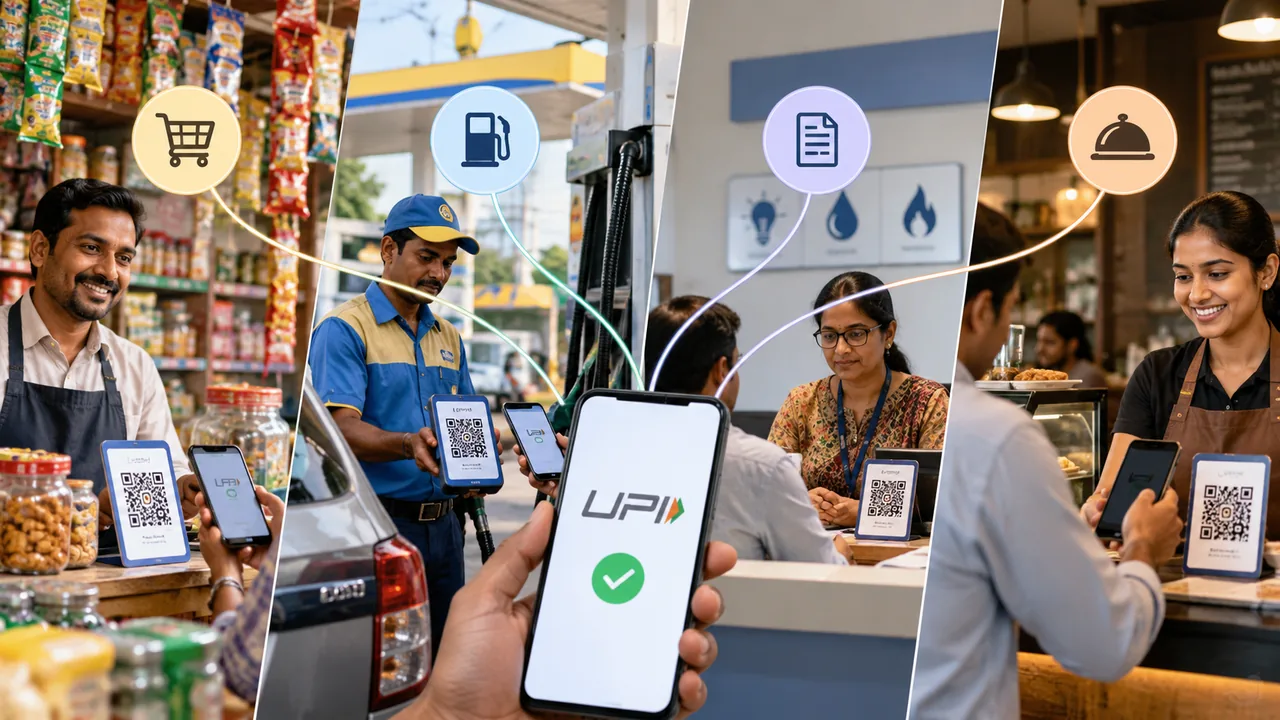
The introduction of UPI MDR can sound much broader than it actually is. A headline saying “MDR on UPI payments above ₹2,000” may create the impression that a large share of everyday merchant transactions will suddenly become chargeable.
The government’s own estimate is very different: approximately 96% of P2M transactions are expected to remain unaffected.
Where the 96% Figure Comes From
In its September 2026 clarification, the Government said that approximately 96% of merchant transactions would remain unaffected because they are either below the ₹2,000 threshold or covered by the zero-MDR framework for small merchants.
The same policy package is explained in the Department of Financial Services FAQs on select UPI P2M transactions.
Does That Mean Exactly 4% Will Always Pay MDR?
No. The 96% figure is an estimate based on the transaction mix considered when the framework was announced. It should not be converted into a permanent mathematical law that exactly 4.00% of all future merchant transactions will pay MDR.
Transaction behaviour can change over time. Average ticket sizes can move, merchant classifications can change and the share of payments in special categories can shift.
Why Most Transactions Remain Outside the Standard MDR
Several parts of the framework keep the affected share small.
Payments Up to ₹2,000
Qualifying regular merchant payments up to ₹2,000 remain at zero MDR. Small-value transactions make up a large share of UPI usage.
P2PM Small Merchants
Qualifying small merchants under the P2PM framework continue at zero MDR while they remain within the prescribed conditions.
P2P Is Not Part of the Merchant MDR Pool
Person-to-person payments remain free regardless of amount. They are not included in the P2M merchant transaction share being discussed.
Does “Unaffected” Always Mean the Same Thing?
In the government’s 96% statement, the emphasis is on P2M transactions that remain free because they are below the threshold or within the zero-MDR small-merchant framework.
Special merchant categories that have a lower rate or flat fee should not automatically be treated as “zero MDR” merely because their charge is lower than 0.4%.
Why the 96% Figure Matters for Consumers
The MDR is not a consumer transaction fee in any case. The 96% statistic is about merchant transactions, not about how many consumers are allowed to use UPI for free.
Consumers continue to make UPI payments without a transaction charge under the framework.
How This Fits With the ₹2,000 Rule
The threshold is central to the estimate because a huge volume of merchant UPI payments are relatively small. Keeping payments up to ₹2,000 at zero MDR removes a large portion of transactions before the standard rate is even considered.
Why the Figure Should Be Quoted Carefully
The safest wording is “the Government estimated approximately 96% of P2M transactions would remain unaffected.” It would be less accurate to write “96% of UPI will always be free” because that broadens the statistic beyond what it actually describes.
Why Transaction Volume and Transaction Value Are Different
The 96% figure refers to the share of merchant transactions by volume that remain unaffected, not necessarily 96% of the total rupee value flowing through merchant UPI payments. A smaller number of high-value transactions can represent a larger share of value.
That distinction matters when interpreting the policy impact. The framework can leave most transactions untouched while still applying MDR to a meaningful amount of higher-value merchant payment activity.
How the Estimate Could Change Over Time
If average UPI ticket sizes rise, more merchants move out of P2PM, or consumer payment patterns shift, the share of transactions subject to MDR could change. Conversely, continued growth in low-value UPI usage could keep the unaffected share high.
That is why the government’s 96% figure is best quoted as an estimate at the time of introduction rather than as a fixed permanent characteristic of UPI.
What the 4% Affected Share Does Not Tell Us
The estimate does not tell us how the affected transactions are distributed across industries, merchant sizes or regions. It also does not tell us the total MDR revenue that will ultimately be collected. Those would require additional data.
So the figure should be used for one purpose: showing that the government expected the MDR to touch a relatively small share of merchant transactions by count.
Why the Estimate Supports the “Targeted” Description
Most UPI merchant payments are small. By keeping payments up to ₹2,000 free and continuing zero MDR for qualifying P2PM merchants, the framework removes large volumes of everyday commerce from the standard charge.
The remaining affected slice is more concentrated in higher-value regular merchant transactions and special categories with their own rules. That structure is why the policy is better described as targeted than universal.
Bottom Line
The Government estimated that roughly 96% of P2M transactions would remain unaffected by the new MDR framework because they are either below ₹2,000 or covered by the zero-MDR small-merchant structure. The figure shows that the policy is targeted at a relatively small share of merchant transactions, but it should be treated as an estimate rather than a permanent fixed percentage.